

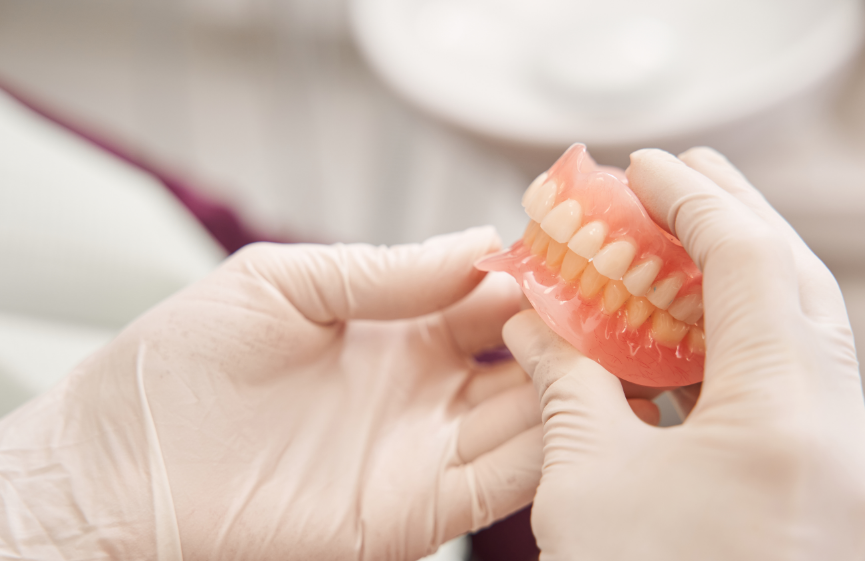
Getting dentures is a big step toward restoring your smile, your confidence, and your ability to eat comfortably. But if you’re like many people, one of your first concerns isn’t about chewing — it’s about talking.
The truth is, speaking with new dentures can feel a little strange at first. The good news? With patience and a little practice, most people adjust beautifully. Here’s what you can expect and how to make the transition smoother.
Why Speech Feels Different at First
Your tongue, lips, and cheeks have spent years working with your natural teeth. When dentures are introduced, the shape and feel of your mouth changes. Even small differences in thickness or positioning can affect how air flows when you speak.
You might notice:
- A slight lisp, especially on “s” or “sh” sounds
- Clicking noises while talking
- Words feeling bulky or awkward
- Increased saliva at first
These changes are completely normal. Your mouth simply needs time to relearn how to form words with the new appliance in place.
The Adjustment Period: What’s Normal?
For most people, the first few days to weeks involve the biggest learning curve. Muscles in your tongue and cheeks gradually adapt, and your brain recalibrates how to form certain sounds.
If you experience minor slipping while speaking, that can also be part of the adjustment phase. As your facial muscles strengthen and you grow more comfortable, stability often improves. If movement continues or feels excessive, your dentist can make adjustments to improve the fit.
Remember, practice truly makes progress here.
Practical Tips to Speak More Clearly
The fastest way to feel confident speaking with dentures is to practice intentionally. Here are simple, effective techniques that help:
Read out loud every day.
Spend 10–15 minutes reading a book, newspaper, or even social media posts aloud. This allows your tongue to adapt to new shapes and positions in a low-pressure setting.
Slow down your speech.
Talking a little more slowly gives your mouth time to form sounds properly and reduces clicking or slipping.
Practice tricky sounds.
If “s,” “f,” or “th” sounds feel challenging, repeat words that use them. For example, try phrases like “sixty-six” or “fresh fish.” Repetition strengthens coordination.
Bite and swallow before speaking.
If dentures feel slightly loose, gently biting down and swallowing can help seat them properly before you start talking.
Use denture adhesive if recommended.
For some patients, adhesive provides added stability and confidence during the adjustment period.
Be Patient with Yourself
It’s completely normal to feel self-conscious at first. You may be hyper-aware of every tiny sound difference, even if no one else notices. In reality, most people around you won’t detect the small changes you’re focused on.
Within a few weeks, many denture wearers report that speaking feels natural again. The key is consistency, patience, and open communication with your dental team if something doesn’t feel right.
Dentures are designed to restore not just your smile, but your quality of life — and that includes feeling comfortable in conversation. With a little practice and time, your voice will feel like your own again.
About the Practice
Plum Grove Family Dental provides comprehensive dental care in a welcoming, patient-centered environment. Dr. Wang and Dr. Modi offer personalized solutions for tooth replacement, including full and partial dentures designed for comfort, function, and aesthetics. We focus on helping patients adjust confidently to their new smiles, offering guidance, follow-up care, and precise adjustments when needed.
Call us at (847) 221-5860 or request an appointment online.